
'Task' Invents 'Red Meat Prestige' (Complimentary)
'Task' was an HBO show that didn't shy away from looking sort of like a Taylor Sheridan show, and that was what made it great.

Welcome to The #Content Report, a newsletter by Vince Mancini. I’ve been writing about movies, culture, and food since the late aughts. Now I’m delivering it straight to you, with none of the autoplay videos, takeover ads, or chumboxes of the ad-ruined internet. Support my work and help me bring back the cool internet by subscribing, sharing, commenting, and keeping it real.
—
The HBO of today is not quite the Sopranos/Wire/Six Feet Under HBO, when almost every show they did automatically became the watercooler show for the few months when it aired (with all due respect to John from Cincinnati). They still have shows like that (White Lotus, Righteous Gemstones), though the slate these days is also littered with the kinds of IP-driven content for a pre-selecting audience that could come from any streamer (House of the Dragon, Last Of Us, the IT and Dune shows). Admittedly, HBO does manage to turn IP into genuinely great shows more than anyone else (The Penguin, Gilded Age), but it still has a bit of that stink on it. HBO’s greatest innovation of late is arguably letting comedy weirdos like Nathan Fielder and Tim Robinson reinvent the half-hour comedy.
Task, from creator Brad Inglesby, which finished its seven-episode run this past Sunday, recaptured some of that prestige drama magic. Mostly, it seems, by leaning into genre. Task didn’t try to reinvent TV so much as just be good TV. In that, it succeeded beautifully. Whereas the classic HBO slogan from its peak era was “it’s not TV, it’s HBO,” Task decidedly is TV, not all that different in concept from meat-and-potatoes shows by gritty lunchpail showrunners like Taylor Sheridan or Kurt Sutter. Task has good cops, biker gangs, single moms and gangster WAGs with hearts of gold, and old salts searching for redemption, all in what was pretty close to a police procedural. It starts with a crime and ends with the cops getting their man (/men); hard to get more traditional than that.
And still it managed to feel like “premium TV,” even in a media paradigm that has mostly collapsed that distinction. Task managed this mostly through great acting, a full spectrum of morality depicted, regionally appropriate accents, and the fact that most of the episodes were longer than an hour. I probably could’ve done with ten 42-minute episodes instead of seven 61-minute ones, but I digress. Mostly Task offers a glimpse into a glorious future, of upscaled genre as the antidote to IP with White Elephantitis. Let’s call it “Red Meat Prestige.” (And yes, The Wire was also sort of that, a police procedural that sneakily reinvented the police procedural. Its outward familiarity may be partly why the general public didn’t recognize its greatness until relatively late in its run).
It was hard to tell what Task was going to be based on Brad Inglesby’s track record. His list of credits included arthouse content both bad and good (writing Out of the Furnace, creating Mare of Easttown), and all manner of screenwriting gig work in between, from above average sports movies (The Way Back, which I liked less than The Way Way Back) to rightly forgotten Liam Neesons vehicles (Run All Night). Maybe it says something that the projects on which Inglesby seems to have had the most creative control (Mare and Task) are easily his best. Yet all that experience on less prestigious projects doesn’t seem to have hurt either. “FX show with Delco accents” isn’t a bad niche, but Inglesby admirably took Task further than that.
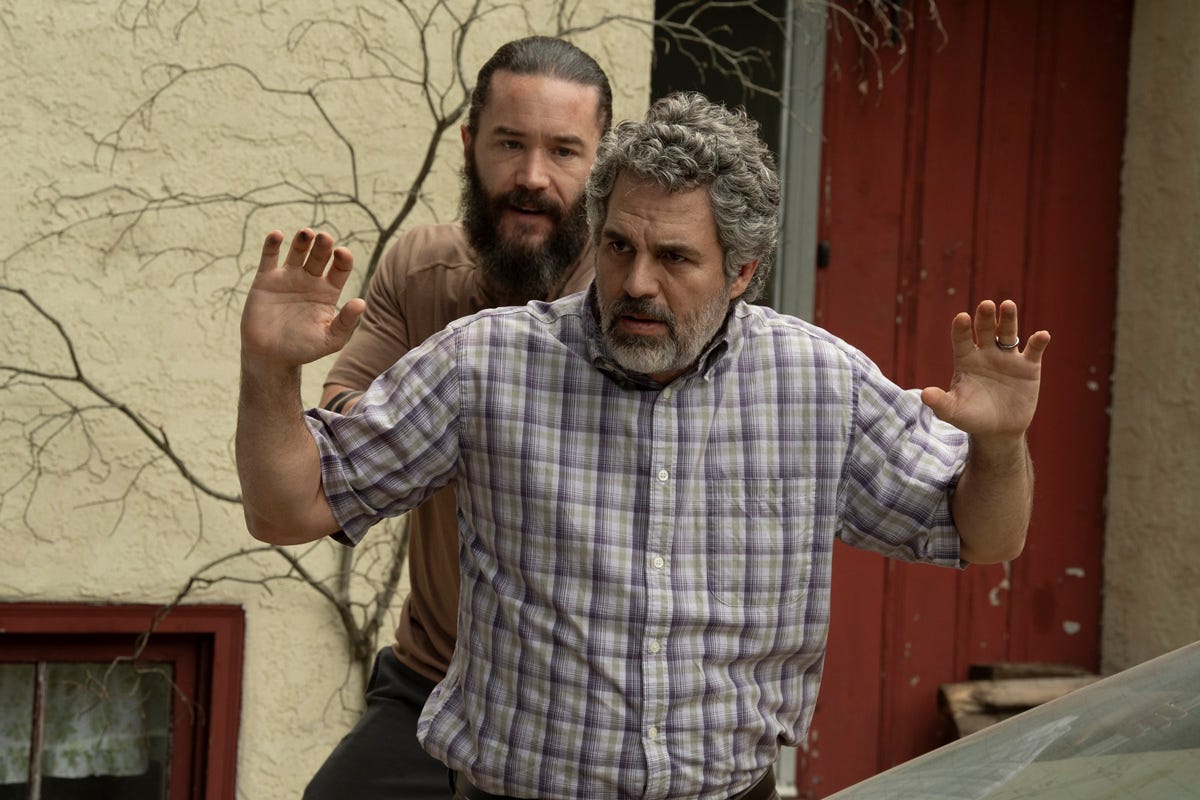
Task is a show that distinguishes itself through subtle tonalities. Having Mark Ruffalo play the alcoholic FBI dad (who is also an ex-priest and a foster parent) is like a cheat code, to be sure. A rumpled Ruffalo (now with glorious fat suit!) alone is good enough for probably 20 minutes of automatic buy-in, even if everything else in the show sucks. But beyond that, basically every other biker show on TV proves how difficult it is to write non-comic book biker characters—who are plausibly realistic, but also sympathetic or terrifying by turns. Even an otherwise acclaimed show like Breaking Bad was pretty terrible at sketching realistic tweekers, especially early on. Tom Pelphrey, playing Task’s sympathetic biker, Robbie Pendergrast, was certainly a find, anchoring the whole thing with his sad eyes and big beard, creating possibly the most sympathetic ponytail guy in the history of television. Pelphrey single-handedly elevates the entire Dark Hearts storyline, which could’ve easily felt FX-y or Paramount+-y without him (please don’t act like you don’t know what I mean, it degrades us both). The balance Pelphrey finds is rare, where if any one element—look, physicality, accent, acting choices—is off, the entire thing instantly becomes stagey and it doesn’t work.
Pelphrey providing the buy-in gives Inglesby room for a deftly written biker gang subplot that plays out with surprising nuance. Jamie McShane as Per, the ruthless gang leader, is great at playing the terrifying heavy (and the show occasionally does overplay how physically intimidating he actually is, as does basically every crime show including the Sopranos), but as the show goes on, he continues to reveal additional layers. Like that, beyond the facade of the ruthless professional he cultivates, Per— somewhat inexplicably—keeps sticking his neck out for the chapter leader he’s vouched for, Jayson Wilkes, played by Sam Keeley. The show is arguably all the better for not spelling out exactly why Per has such fatherly feelings for Wilkes, who doesn’t entirely reciprocate them. It’s partly a show about the power of inertia, both institutional and personal.
The larger point is that everyone in this drama is on some level trying to deal with forces beyond their control, and they never entirely know who to trust, who to protect, or who to sacrifice. Great writing doesn’t mean avoiding clichés or pulpy elements just for the sake of avoiding them (like writing a cop show about badass bikers, say), it means writing every character as someone who believes that they’re the hero of their own story. They don’t know exactly how it’s going to end, even if you do. Part of what elevates Task is that in a show about competing cabals of shifting morality, every group is beset with their own bespoke mixture of petty infighting, institutional corruption, and general incompetence (omg, it me!). In a post-Sorkin television environment, one easy way to stand out is to stubbornly resist competence porn. No one is too good at what they do, or too articulate about their own motivations (though there are a few load-bearing monologues in there; I didn’t hate them).
